
Changes in Tennis Net Materials
Early Materials: The initial tennis nets were likely made from natural materials such as wool or flax. These materials were prone to wear and sensitive to weather changes.
Synthetic Materials: With the development of synthetic materials, tennis nets began to be made from more durable and weather-resistant materials, such as nylon. Nylon nets are not only stronger but also easier to maintain, as they do not deform or rot as natural materials do.
Standardization: As the sport of tennis became more standardized, the manufacturing of tennis nets also began to follow the standards set by the International Tennis Federation (ITF), which dictate the dimensions of the net, mesh size, and the material of the net cords.
Development of Tennis Training Equipment
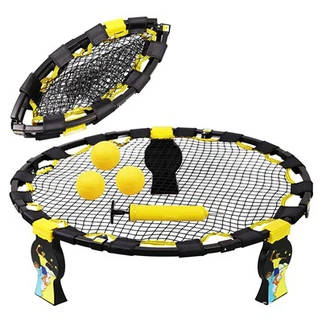
Rebound Nets: Rebound nets are a common piece of equipment in tennis training, allowing players to practice strokes without a partner. These nets were initially likely made from heavier metals and natural fiber materials.
Material Improvements: With technological advancements, the frames of rebound nets have become lighter, often made of aluminum or other lightweight metals. The netting material has also been upgraded from natural fibers to durable synthetic materials like polypropylene or polyester, which can withstand repeated impacts without losing elasticity.

Innovative Design: Modern rebound nets feature more sophisticated designs that allow for adjustments in angle and tension to simulate different types of shots and speeds. Some advanced models can even adjust the angle and force of the incoming ball to provide more varied training.
Portability and Durability: Modern training equipment emphasizes portability and durability. Lightweight metal frames and weatherproof synthetic netting make the equipment easy to carry and set up, while still being durable enough to withstand frequent use.
Multifunctional Training Equipment: In addition to rebound nets, other multifunctional training devices have been developed, such as adjustable-height nets, mobile ball-hitting robots, and ball machines with speed and spin control. These devices often utilize high-tech materials and electronic components.
Overall, with the advancement of material science and the increasing demand for sports training, tennis nets and training equipment have become more sophisticated and efficient. The use of synthetic materials has enhanced the durability and performance of equipment, while also making training more diverse and engaging.